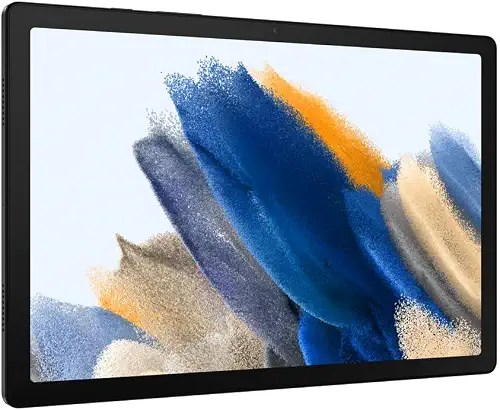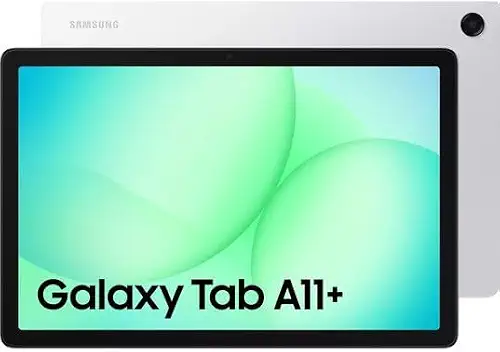
A tablet under €350 is not a poor substitute for everyone, but you do not give up the same thing on every criterion. Comparing the models Picksly tracks, with their performance, screen, memory and battery scores drawn from public sources, shows where the gap with pricier tablets really opens up, and where it is much thinner than you might expect.
The figures below are from 11 October 2026, read from Picksly's public API (France market), for tablets that have a verified new offer in France. They replace an earlier reading dated 24 September, now out of date: the catalogue, prices and scores move, and the screen has been scored since 30 September. Prices often move by a few euros from one day to the next: always check the displayed price before buying.
What the catalogue shows
Picksly tracks 97 scored tablets, 31 of which have a verified new price in France: 18 cost €350 or less (from €167 to €317, median price: €217) and 13 cost more (from €370 to €1,099, median: €600). Median scores out of 100, criterion by criterion:
| Criterion | €350 or less | Over €350 |
|---|---|---|
| Performance | 7 | 63 |
| Screen (sharpness) | 10 | 47 |
| Memory (RAM) | 25 (6 GB) | 50 (8 GB) |
| Battery (capacity) | 24 | 53 |
Read it with care: these are the tablets Picksly tracks, not the whole market, the sample is small (18 and 13 models, and a median moves as soon as one model comes or goes) and a score is always relative to a frozen scale (see below). Still, the picture is clear: under €350 you lose on all four criteria, and the gap is widest on performance (56 points), then screen (37), battery (29) and memory (25 points).
The criteria, in the order they matter under €350
1. Performance
Performance scores for tablets at €350 or less are very low: a median of 7 out of 100, and the best reaches 22. That reflects the scale, which runs from entry-level to the top of the market: a 7 does not mean "unusable", it says the gap with the best chips is very large, and that you would feel it in demanding games, editing or heavy multitasking. Performance is the total score of the public AnTuTu ranking.
2. Screen (sharpness)
Picksly scores a tablet's screen on its sharpness: the pixels per inch published on the GSMArena spec sheet (scale 2026-09, from 204 to 352 ppi), for 90 of the 97 tracked tablets. It measures resolution, not panel quality (colours, contrast, peak brightness, refresh rate). Under €350 the median is 10 out of 100 against 47 above: several Galaxy Tab A models sit at 0 or barely more, while the Xiaomi Redmi Pad 2 and the OnePlus Pad Go 2 (47 and 53) hold their own against pricier models.
3. Memory (RAM)
Under €350, 5 of the 18 models have 4 GB or less, 6 have 6 GB and 7 have 8 GB; none reaches 12 GB. Above €350, 7 of the 13 models have 8 GB, 5 have 12 GB or more and 1 has 6 GB. Memory is read from the configuration tested in the AnTuTu ranking: the same model often exists in several configurations, so check the one in the offer.
4. Battery
This is the criterion where the gap is most uneven: median 24 under €350 against 53 above, and four models at €350 or less beat the median of the pricier models — the Xiaomi Poco Pad M1 (score 98, or about 12,000 mAh), the Honor Pad 10 (64), the OnePlus Pad Go 2 (63) and the Xiaomi Redmi Pad Pro (62). Careful: Picksly reads the battery capacity (GSMArena spec sheet), not a measured battery life; two tablets with the same capacity can last differently depending on the screen and the chip.
5. What the score sees little or not at all
Storage (90 of the 97 tablets), fast charging (72) and peak brightness (64) are also scored, but they are values announced by the manufacturer (GSMArena spec sheet) and weigh little (8%, 4% and 4%); the length of promised updates weighs 2%, but no tablet has a value for it yet. In the "Market" score, the weights are: performance 27%, battery 22%, screen 20%, memory 13%, storage 8%, charging 4%, brightness 4% and updates 2%. The weight of an unmeasured criterion stays in the total, which prevents a flattering overall score built on only a few criteria. Two tablets can still differ a lot on panel quality, weight or sound without the score saying so: look at the merchant listing before buying.
What the catalogue puts first under €350
On 11 October 2026, the overall scores computed by Picksly put these first, at €350 or less:
- Budget profile: Xiaomi Poco Pad M1 (64.7 out of 100), OnePlus Pad Go 2 (58.0), Xiaomi Redmi Pad 2 (56.2), with the Honor Pad 10 (56.05) just behind.
- Smart profile: only the Xiaomi Poco Pad M1 (55.6) clears the threshold of 50; the OnePlus Pad Go 2 (49.7) and the Honor Pad 10 (46.7) come just below.
This is not a lab test: they are scores computed from public sources, on the date shown, and they move with prices and new readings. The ranking has in fact changed since our reading of 24 September (Poco Pad M1 at 75 for Budget, Honor Pad 10 ahead of the Redmi Pad 2): the screen entered the score on 30 September. Take it as a dated reading, not as the permanent state of the catalogue.
How Picksly chooses in this range
The Budget profile keeps only tablets at €350 or less and takes the best Budget score, where value for money weighs 35%. The Smart profile requires at least 50 out of 100, with value for money at 20%. An overall score exists only if more than half of the criteria weight is measured: otherwise the page shows "not enough data" instead of a zero.
Frequently asked questions
Is a performance score of 7 out of 100 a problem?
Not necessarily: it places the tablet against a frozen scale, not against a specific use. Mostly it says that a pricier model will do clearly better on heavy tasks; for reading, watching a video or browsing, it is up to you to judge what is enough.
Why is the battery a capacity and not a battery life?
Because Picksly has no measured battery-life test for tablets. It reads the capacity in mAh from the spec sheet, states it for each model, and never presents it as a measured duration.
Where do the scores and prices come from?
Scores come from public sources (AnTuTu and GSMArena pages), each with its date and link on the model page. Prices come from re-read merchant listings, on the date shown. Picksly may earn a commission through affiliate links, at no extra cost to you, and this influences neither the scores nor the ranking. What affiliation can change is explained on our transparency page.
Is the screen of tablets scored?
Yes, since 30 September 2026, but only its sharpness: the pixels per inch published by GSMArena, from 204 to 352 ppi, for 90 of the 97 tracked tablets. It measures resolution, not panel quality (colours, contrast, smoothness): check it on the merchant listing.
Install the Picksly extension: it recognises the product you are looking at, looks for verified alternatives suited to your profile — Budget, Smart or Premium — and tells you when the listing you see is not the best deal.