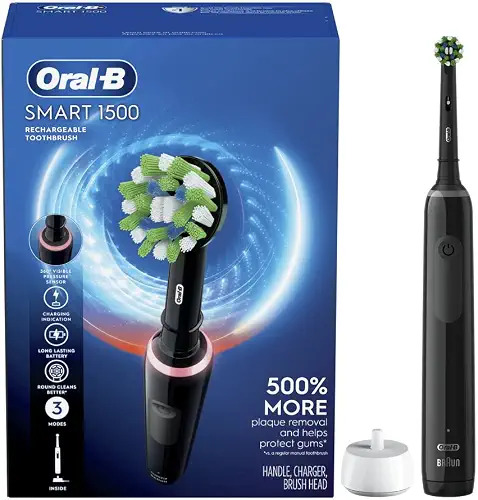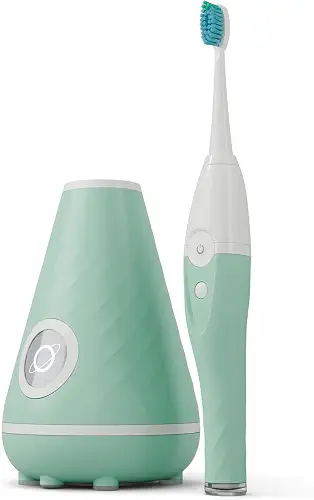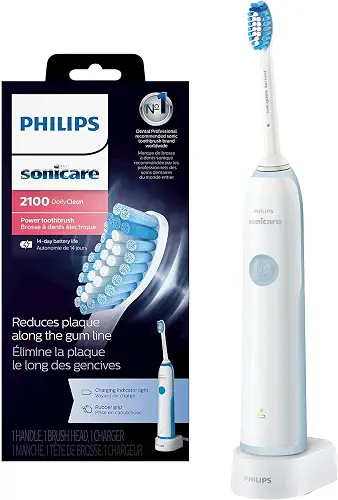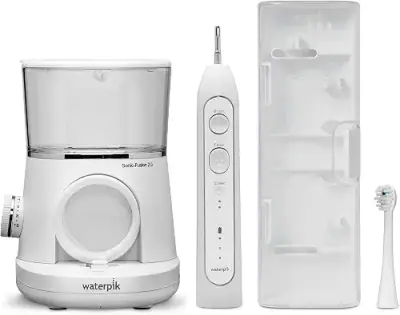
Choosing between a sonic or oscillating toothbrush often comes down to Philips Sonicare versus Oral-B. The two technologies do not clean in the same way, but published studies do not show that one is better. What matters lies elsewhere: brushing for two minutes, twice a day, and replacing the brush head on time. Here is what serious sources say, what to look for on the product page, and the right choice for your profile.
The prices quoted were recorded on Amazon.fr between 3 and 12 November 2026 and may have changed: always check the price shown by the shop before buying. The health sources, linked in the text, were consulted on 17 October 2026. Picksly has not tested any of these toothbrushes.
This article summarises published studies and public recommendations; it does not replace your dentist’s advice, especially if you have sensitive gums, braces or implants.
Oscillating-rotating or sonic: two different movements
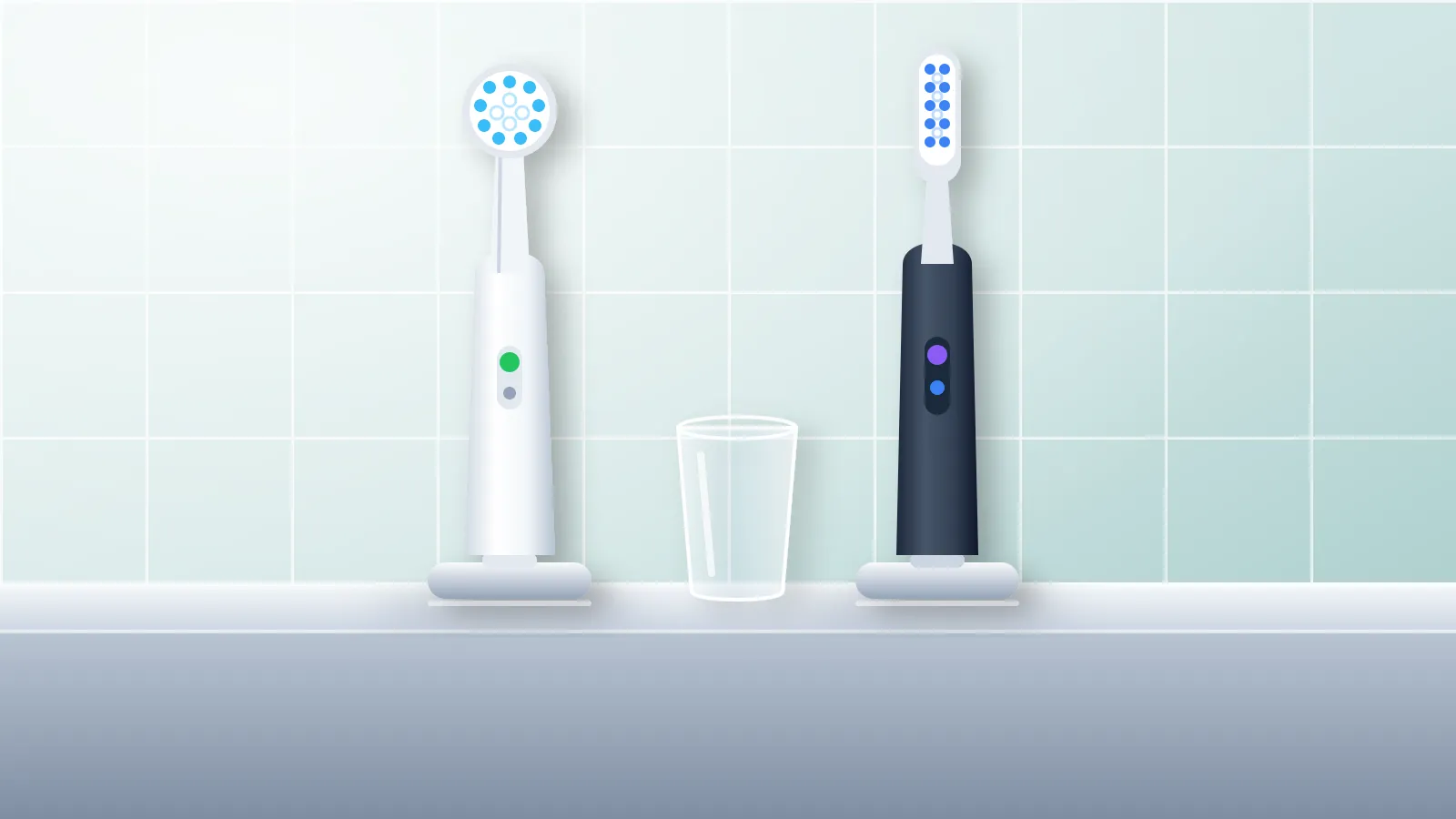
- Oscillating-rotating brushes (Oral-B) have a small round head that turns one way, then the other. You place it on one tooth, then move slowly to the next.
- Sonic brushes (Philips Sonicare and most of the lesser-known brands in the Top 10) have an elongated head, like a manual brush, whose bristles vibrate very fast from side to side. You glide it along the teeth.
The feel differs: tooth-by-tooth cleaning on one side, a more diffuse vibration on the other. That is a legitimate criterion: the best toothbrush is the one you will actually use morning and evening.
What the studies say
Electric versus manual
The reference Cochrane review (Yaacob et al., 2014) gathered 56 trials, 51 of them with usable data on 4,624 participants. With moderate-quality evidence, electric toothbrushes remove more dental plaque than manual ones: −11% over one to three months and −21% beyond three months. For gum inflammation (gingivitis), the reduction is 6% and then 11%. The authors stress that the clinical importance of these findings remains unclear, and that the side effects reported were localised and temporary.
Oscillating-rotating technology is the most studied: 27 trials, against 10 for side-to-side brushes. It shows a reduction in plaque and gingivitis at both time points. That does not make sonic brushes less effective: they have simply been evaluated less.
Sonic versus oscillating
A second Cochrane review (Deacon et al., 2010) compared types of electric toothbrush with one another: 15 trials, 1,015 participants. Its conclusion is clear: for lack of enough trials comparing the same technologies, no definitive conclusion can be drawn about one mode being superior to another. We found no more recent update of this review.
What health authorities recommend
- France’s Haute Autorité de santé (recommendations of March 2010): brush at least twice a day with a fluoride toothpaste suited to age (1,000 to 1,500 ppm of fluoride above age 6).
- The French dental health association UFSBD (advice sheet): two brushings a day, morning and evening, for 2 minutes, with a 1,450 ppm fluoride toothpaste.
- The UK’s NHS (page reviewed on 30 June 2025): it does not matter whether the brush is electric or manual, as long as every surface of every tooth is cleaned with fluoride toothpaste.
- The American Dental Association (page updated in August 2026): replace the toothbrush every 3 to 4 months, sooner if the bristles are matted or frayed.
In short: regular brushing for the right length of time matters more than the technology.
What really matters on the product page
A timer
Since the recommended duration is two minutes, this is the most useful feature. Many models also signal every 30 seconds so you move on to the next area: that is the case with the Oral-B Vitality Pro, the cheapest in the Top 10 (4 × 30 seconds, according to the Test-Achats product sheet).
A pressure sensor, if you press hard
It warns you when you brush too hard, with a light or by slowing down; Oral-B advertises a visible sensor that lights up on the Pro 2000. Neither Cochrane review evaluated it: it is a convenience, not a guarantee. The Vitality Pro does not have one; in the Top 10 it appears from the Smart range upwards.
The cost of brush heads
This is the hidden cost. At the ADA’s pace (a new head every 3 to 4 months), one person uses 3 to 4 brush heads a year, or 15 to 20 over five years. Multiply the price of one head by that number before comparing two handles, and check that the brand’s heads are easy to find: each range has its own. A pack with many heads is only a good deal if the unit price is; our guide to spotting a genuine bargain explains the method.
The rest (battery life, case, screen, app) is about comfort: none of the studies cited compares models by price range.
The right choice for your profile
The Picksly Top 10 ranks toothbrushes by buyer rating weighted by the number of reviews, on Amazon.fr. For an Oral-B versus Philips comparison by range, see also our pick of the best electric toothbrushes.
Budget: under €50
- Oral-B Vitality Pro — oscillating, €27.09 (recorded on 4 November), 4.4/5 from 33,987 reviews. Timer, no pressure sensor.
- Philips Sonicare 2100 — sonic, €45.25 (3 November), 4.4/5 from 4,903 reviews.
- 7AM2M Sonic — sonic, €38.96 (11 November), 4.5/5 from 1,792 reviews, supplied with 6 heads (18 months at one head per quarter) and an advertised 90-day charge. Little-known brand: check that replacement heads are available.
Smart: the pressure sensor without the extras
- Philips Sonicare 5950 series — sonic, €130.31 (4 November), with pressure sensor, 4.7/5 from 812 reviews: the best rating in the Top 10.
- Oral-B Pro 2 2000 — oscillating, €149.90 (4 November), 4.5/5 from 967 reviews, visible pressure sensor advertised by Oral-B. At this recorded price it costs more than the Sonicare 5950: compare when you buy, and beware of crossed-out prices in the run-up to Black Friday (how to spot a fake deal).
- For two people: the Lächen pack of two sonic toothbrushes, €62.99 (4 November), 4.5/5 from 997 reviews, 10 heads included. Or the sonic MyVariations, €68.99 (11 November), 4.6/5 from 2,835 reviews.
Premium: the best finish
In the current Top 10, all the high-end toothbrushes are oscillating Oral-B models:
- Oral-B iO6 — €154.23 (4 November), 4.6/5 from 855 reviews.
- Oral-B iO 9 — €199.98 (12 November), 4.6/5 from 769 reviews, with 3 replacement heads.
- Oral-B Genius 9900 — €329, but this price dates from 13 September: check it with the shop.
You pay for the finish and the features, not for proven superior effectiveness.
In short
- You like cleaning tooth by tooth with a small round head: oscillating. You prefer the motion of a classic brush: sonic.
- Oscillating-rotating brushes have more published trials, but no study shows that one technology beats the other.
- Insist on a timer, add a pressure sensor if you press hard, and work out the cost of brush heads.
To know whether the price shown on Amazon is a good one, install the Picksly extension: it compares the page you are viewing with the offers we track, according to your profile. And for the best-rated models, see our Top 10 electric toothbrushes.
FAQ
Sonic or oscillating toothbrush: which cleans better?
The studies do not settle it: the 2010 Cochrane review could draw no definitive conclusion. Oscillating-rotating brushes have simply been studied more.
Is an electric toothbrush better than a manual one?
On average, slightly: the 2014 Cochrane review finds 11% less plaque over one to three months and 21% beyond, with moderate-quality evidence and unclear clinical importance. The NHS points out that a manual brush used properly, two minutes twice a day, works too.
How often should you change the brush head?
The American Dental Association recommends replacing the toothbrush every 3 to 4 months, sooner if the bristles are matted or frayed. So budget for 3 to 4 brush heads per person per year.
Is a pressure sensor essential?
No. It is useful if you press hard, but the Cochrane reviews cited did not evaluate it. In the Top 10, it starts at €130.31 (Sonicare 5950 series).
---
Picksly may earn a commission on purchases made through its links, at no extra cost to you. What affiliation can change is explained on our transparency page.